
Why 3D Visualization is No Longer Optional for Metal Building Businesses
The Metal Building Industry Isn’t Slowing Down
The metal building industry has grown into a massive market, valued in 2024 at $25.1 billion and still climbing as demand spreads across commercial, agricultural, and residential projects.
Buyers move faster than they used to. They research more. With modern tools letting people see, adjust, and price buildings instantly, 3D Visualization has stopped being optional and started becoming expected.
Key Takeaways
- The metal building market continues to grow year over year
- Buyers expect faster answers and clearer visuals early on
- 3D Visualization replaces guesswork with real-time clarity
- Interactive tools shorten sales timelines
- Visual design reduces miscommunication
- Instant pricing builds trust with customers
What 3D Visualizers Do
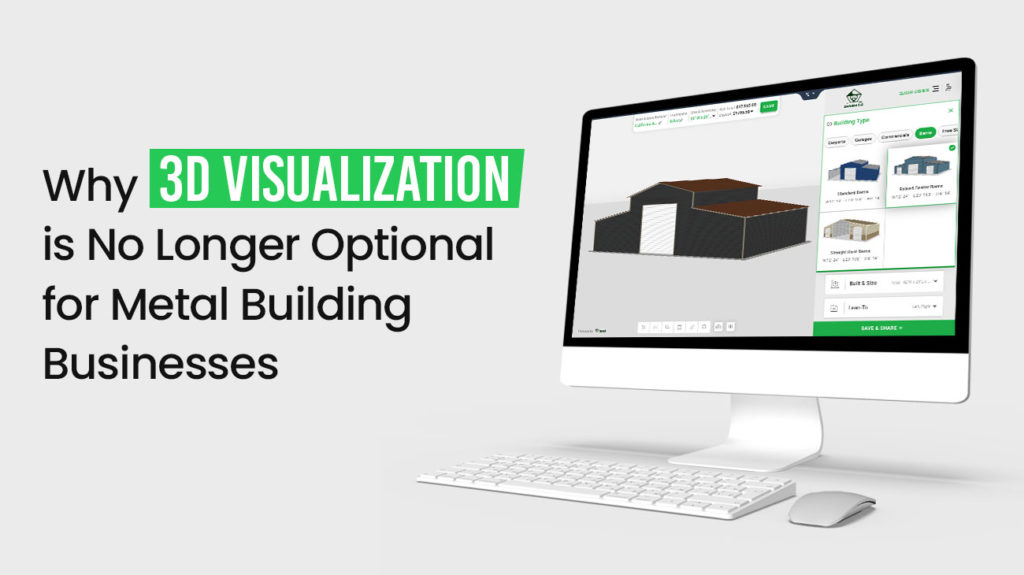
A 3D Visualizer gives customers and dealers a shared starting point. Instead of rough sketches or long explanations, the building appears on screen and responds instantly to changes. Sizes, layouts, and features update as soon as selections are made, allowing people to explore options without waiting days for revisions or quotes.
- No engineering degree necessary
The system is designed for regular users. Customers can make confident decisions without understanding load calculations or construction terminology. - Quick visuals
Every change shows up immediately. This keeps momentum going and helps customers stay focused on their ideal design. - Instant spec data
Building details update automatically in the background. This keeps specs aligned with selections and reduces manual errors. - Accurate pricing
Prices adjust as options change, which helps avoid surprises later in the process and makes budgeting more realistic from the start.
Why 3D Visualizers Are Necessary for Metal Building Dealers
Metal building dealers face a different type of buyer today. Customers arrive informed, impatient, and ready to compare designs. A 3D Visualizer helps:
- Conversations move faster
Visual tools eliminate long explanations. Customers can see what’s being discussed instead of imagining it. - Eliminate misunderstandings
When a building is visible, assumptions disappear. This reduces redesigns and last-minute corrections. - Improve buyer confidence
Seeing the finished structure helps customers feel sure about their decisions, which often leads to quicker commitments. - Streamline sales teams
Less time is spent on manual drawings and rework, freeing teams to focus on guidance rather than cleanup.
How 3D Visualization Helps Your Customers
Most customers aren’t familiar with metal building design. Expecting them to interpret drawings or technical specs can slow everything down. A 3D Visualizer removes that barrier, and helps customers:
- Explore designs visually, not just technically
- Removes early dependence on engineers or draftsmen
- Make changes easy and risk-free
- Reduce uncertainty before ordering
- Feel involved instead of overwhelmed
What Customers Get with a 3D Visualizer
3D Visualizers outfit your business with the power to do more than just “look” at your design. Below, we compare businesses that use the technology and those that don’t:
| Capability | Businesses with 3D Visualization | Businesses without 3D Visualization |
| Live design changes | Yes | No |
| Real-time pricing | Yes | Often delayed |
| Interactive building views | Yes | Static drawings |
| Automatic spec updates | Yes | Manual entry |
| Customer-driven customization | Yes | Limited |
| Faster decisions | Yes | Slower process |
Why Your Business Needs 3D Visualization
Offering 3D Visualization changes how customers interact with your website. Instead of browsing and leaving with questions, they stay longer, explore options, and arrive already informed. That shift alone can improve lead quality and reduce friction before a sales conversation even begins.
- Better-qualified leads
Visitors who use a visualizer tend to understand their needs before reaching out. - Less friction in the sales process
Clear visuals and upfront pricing remove hesitation and confusion early. - A clear competitive advantage
Many businesses still rely on static images. Interactive tools immediately set you apart from the competition.
FAQs About 3D Visualization
3D Visualization is still new for many buyers and dealers. As such, you may have a few questions about what to expect. To help, we’ve put together answers to some of the questions we see most:
What exactly is a 3D metal building visualizer?
It’s an online tool that allows users to design, modify, and price metal buildings using interactive 3D models.
Is it difficult for customers to use?
No. The interface is intentionally simple and designed for new users.
Does this replace engineers entirely?
No. Final approvals still require professionals, but early-stage design work is significantly reduced.
How accurate is the pricing shown?
Pricing updates based on selections, providing realistic estimates early in the process.
Can customers use it on phones or tablets?
Yes. Modern visualizers are browser-based and work across devices.
Does it really help close deals faster?
In many cases, yes. Clear visuals reduce doubt and help customers move forward with confidence.
Conclusion: Give Your Customers the Experience They Expect
The way metal buildings are sold is changing. Buyers no longer want to wait days for drawings, revisions, or updated quotes. They expect to see their building, explore options, and understand pricing immediately. Dealers who provide that experience move conversations forward faster and build stronger buyer confidence from the start.
A 3D Visualizer helps you deliver exactly that. Instead of long explanations and repeated revisions, you can show customers their building in real time, adjust designs instantly, and guide them toward decisions with clarity.
If you want to shorten sales cycles, reduce back-and-forth, and give your customers a modern buying experience, the next step is simple.
Try our 3D Configurator and see how easily your customers can design, customize, and visualize their metal building projects. Once you experience how smoothly the process works, you’ll understand why more dealers are moving toward our interactive design tool.